
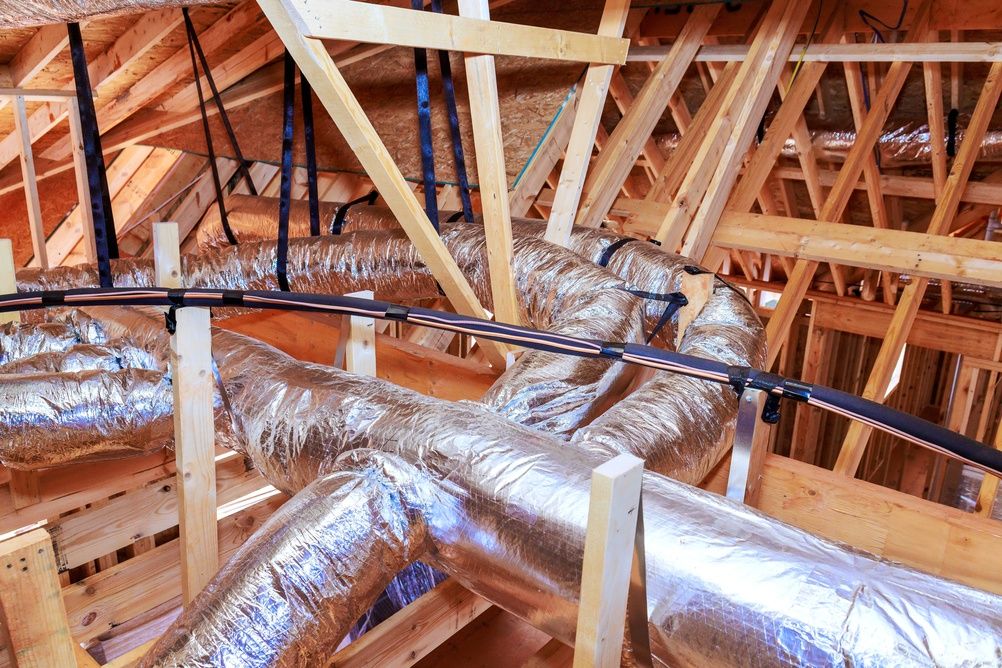
Airflow That Matches Your System's Design
Ductwork Installation in Bluffdale for new construction and home additions requiring balanced heating and cooling delivery
Undersized or improperly routed ductwork restricts airflow and forces heating and cooling equipment to run longer cycles without reaching target temperatures in every room. Infinity HVAC LLC installs ductwork for new construction and additions in Bluffdale using load calculations to size ducts correctly and static pressure testing to validate that air moves efficiently from the furnace and air conditioner to each register. Bluffdale new construction projects often rush duct installation to meet framing deadlines, resulting in systems that underperform during winter heating peaks and summer cooling demands when temperatures push equipment to its limits.
Ductwork sizing follows load calculation results that determine how much conditioned air each room requires based on square footage, insulation, window area, and orientation. Static pressure testing measures resistance inside the duct system after installation, catching problems like kinked flex ducts, undersized trunk lines, or blocked pathways before drywall goes up. Duct sealing prevents leakage that wastes energy and reduces delivered airflow, a step that distinguishes thorough installations from shortcuts taken by contractors focused on speed over performance.
Arrange an on-site evaluation to discuss ductwork requirements for your construction project.
What Proper Ductwork Installation Requires
Proper installation begins with trunk lines sized to carry the total airflow volume your furnace and air conditioner produce, followed by branch ducts sized individually for each room's calculated heating and cooling load. Register placement considers furniture layouts and airflow patterns that prevent hot or cold spots, and return air pathways ensure the system pulls air back efficiently without creating negative pressure that restricts blower performance. Technicians explain these design decisions during installation rather than simply running ducts along the fastest path.
Once installation is complete, you'll notice even temperatures across all rooms without hot or cold zones, registers that deliver strong airflow without excessive noise or weak output, and an HVAC system that reaches thermostat settings in reasonable timeframes rather than running continuously. Static pressure readings confirm that airflow matches design specifications, which means your equipment operates at its intended efficiency rather than working harder to overcome duct restrictions.
This service includes duct sealing at all connections and seams to prevent leakage that reduces system efficiency, which is particularly important in unconditioned spaces like attics or crawlspaces where leaked air represents direct energy loss. Ductwork installed without sealing and pressure testing often loses twenty to thirty percent of conditioned air before it reaches living spaces, forcing equipment to compensate with longer run times and higher utility costs.
Questions About New Ductwork Systems
Installing ductwork for new construction or additions involves design decisions that directly affect long-term comfort and efficiency, and understanding those factors helps you evaluate installation quality.
What determines the right duct size for each room?
Load calculations measure the heating and cooling demand based on room dimensions, insulation levels, window area, and sun exposure, then ductwork is sized to deliver the corresponding airflow volume without excessive velocity that creates noise or insufficient velocity that fails to distribute conditioned air effectively.
How does static pressure testing validate ductwork performance?
Pressure gauges measure resistance inside the duct system and compare it against manufacturer specifications for your furnace and air conditioner, revealing whether airflow is restricted by undersized ducts, sharp bends, or blockages that reduce efficiency even when equipment is correctly sized.
When should ductwork be installed during construction?
After framing is complete and before insulation and drywall so routing can follow the most efficient pathways without interference from finished surfaces, and so pressure testing can identify problems while corrections are straightforward rather than requiring wall removal.
Why do some ductwork installations fail during extreme weather?
Bluffdale experiences cold winter nights and hot summer afternoons that push heating and cooling systems to their capacity limits, exposing undersized ductwork that restricts airflow and prevents equipment from delivering its full rated output when demand is highest.
What's included in duct sealing?
Mastic or foil tape applied to all seams, joints, and connections where two pieces of ductwork meet, preventing conditioned air from escaping into attics, crawlspaces, or wall cavities before reaching intended rooms, which is verified through post-installation pressure testing in the greater Salt Lake City metro area.
Infinity HVAC LLC sizes and installs ductwork based on tested engineering methods rather than guesswork or template layouts that ignore your home's specific requirements. Request a ductwork design consultation to review load calculations and installation timelines for your project.