
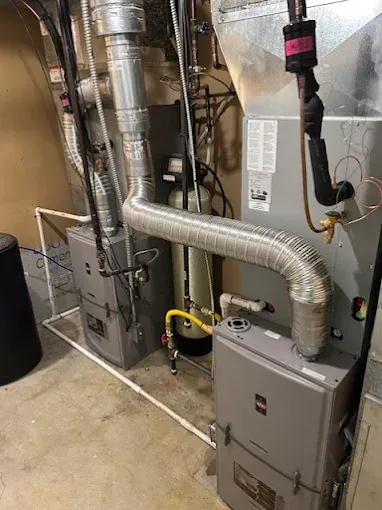
Furnaces Sized for Actual Heat Loss
Heating Installation in Bluffdale for homes where oversized or undersized equipment wastes energy or fails to maintain comfort
Proper AFUE rating matched to home size and insulation ensures cost control despite unpredictable seasonal swings in Utah winter heating demands. Infinity HVAC LLC installs high-efficiency furnaces in Bluffdale after completing load calculations that account for square footage, window area, insulation levels, and typical wind exposure rather than guessing based on old equipment nameplate ratings. Installation includes static pressure testing to confirm ductwork can handle new equipment airflow without creating backdraft or efficiency losses.
The installation process begins with measuring heat loss through building envelope components to determine required heating capacity in BTUs. Technicians stock common installation parts on truck to avoid delays, perform startup sequences that verify ignition timing and flame characteristics, and run safety checks on venting and combustion air supply before leaving the site. Local housing stock age varies significantly across the greater Salt Lake City metro, which affects ductwork condition and whether existing distribution systems need modification to support newer high-efficiency models.
Request a load calculation assessment to determine the correct furnace capacity for your specific home rather than relying on previous equipment size.
How Heating Installation Addresses Sizing Problems
Load calculations measure actual heat loss rather than assuming replacement equipment should match the tonnage or BTU rating of failed units. Oversized furnaces cycle on and off too frequently, which wastes fuel during repeated ignition sequences and leaves temperature swings between cycles. Undersized units run continuously without reaching thermostat settings during cold snaps, driving up utility costs while failing to maintain comfort in occupied spaces.
Once installation finishes, you notice even temperatures throughout the home without cold spots in rooms farthest from the furnace, thermostat settings that hold steady rather than drifting several degrees before the system responds, and lower fuel consumption compared to older equipment running at the same indoor temperature targets. Static pressure testing during installation confirms ductwork allows proper airflow, since restricted ducts force even correctly sized furnaces to work harder and wear out faster.
Experience installing five to seven systems weekly during busy months provides familiarity with common ductwork configurations in local housing developments and how different floor plans affect heating distribution. Installation also includes verifying combustion efficiency and venting integrity to prevent carbon monoxide intrusion or backdrafting that develops when replacement furnaces change airflow patterns in existing duct systems.
Questions Before Installing New Heating Equipment
Installation decisions often involve equipment selection, ductwork compatibility, and whether existing infrastructure needs upgrades to support new furnaces.
How do you determine the correct furnace size for a home?
Load calculations measure heat loss through walls, windows, ceilings, and floors based on insulation values and local climate data, then add safety margin for extreme weather rather than simply matching old equipment tonnage or BTU ratings.
What happens if existing ductwork cannot handle new furnace airflow?
Static pressure testing identifies restrictions that require duct modifications, return air upgrades, or register adjustments before installation completes, since undersized ducts reduce efficiency and shorten equipment life even with properly sized furnaces.
Why does AFUE rating matter for heating costs in Bluffdale?
Higher AFUE percentages convert more fuel into usable heat rather than losing energy through venting, which matters during extended cold periods when furnaces run for hours daily and small efficiency differences compound into significant cost variations over the heating season.
How long does a typical heating system installation take from start to finish?
Single-unit installations in homes with compatible ductwork generally complete within one day, while projects requiring duct modifications, electrical upgrades, or venting changes may extend into a second day depending on scope and existing infrastructure condition.
What documentation should I receive after installation completes?
Startup checklists showing ignition verification and safety tests, warranty registration confirming equipment model and serial numbers, and load calculation worksheets documenting sizing decisions provide records for future service and validate proper installation procedures.
Infinity HVAC LLC applies two years of installation experience and mentor-led training to each heating system project in Bluffdale, South Jordan, and the greater Salt Lake City metro. Schedule an in-home evaluation to review your heating needs and receive a detailed proposal based on measured heat loss and existing duct capacity.